Intelligent Onboarding Framework
Shipping and refining an MVP to test and validate a smarter, reusable onboarding framework at scale.
Always a work-in-progress, our team is evolving our onboarding framework with measurable impact through quick experiments, and sharing learnings with teams. We contributed new monetization and milestone patterns that are now used today.
2025
Case Study
Highlight
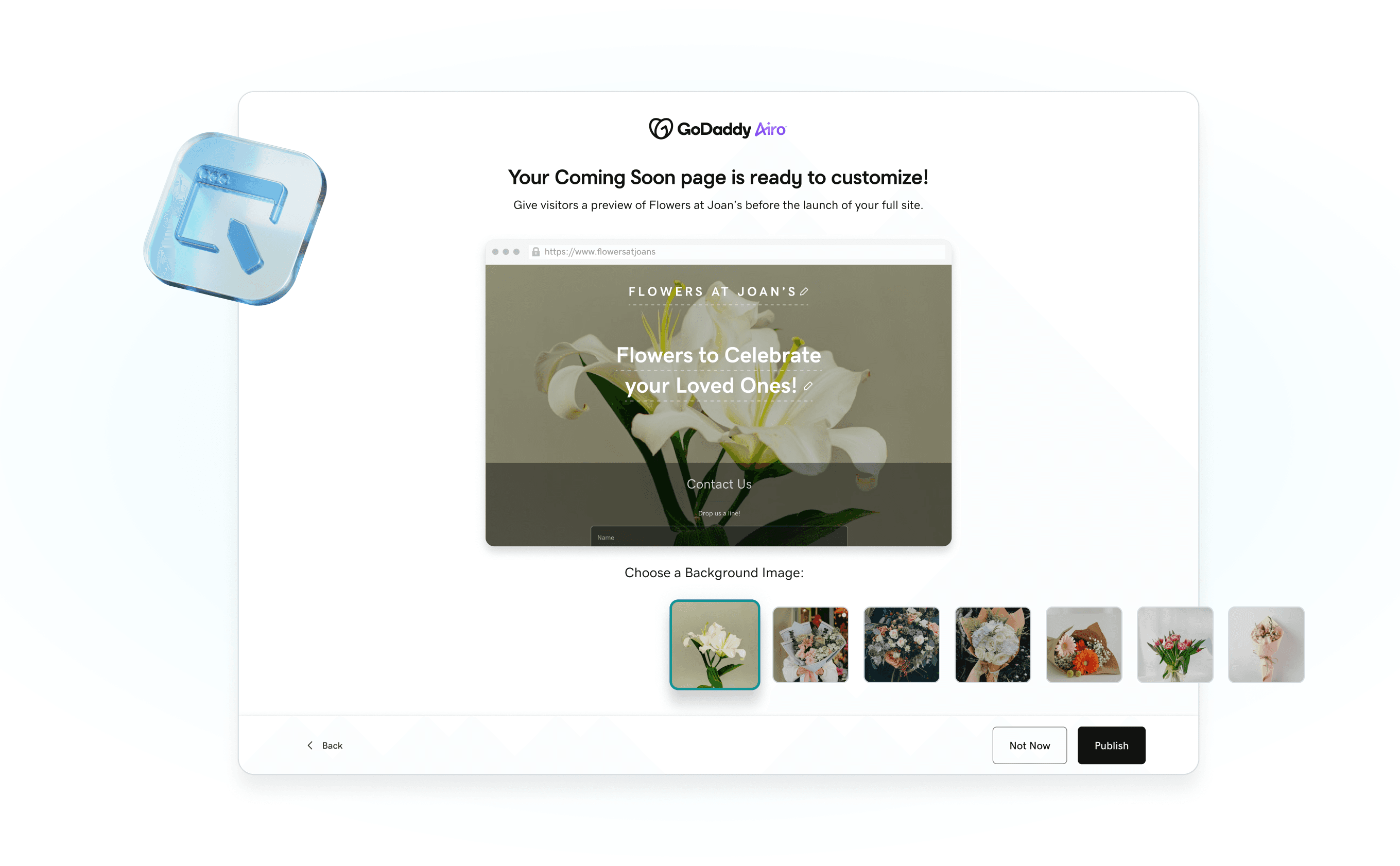
Domain Activation = Customer Success
We know that when customers activate their domain, they are more likely to convert to paid products and engage with GoDaddy features like website and email. This drives long-term retention and customer success, so it is crucial we put purchased domains to use right away.
A Super Bowl Special
Shortly after I joined the Onboarding / Activation team, we were asked to build a mobile-first flow for specifically Super Bowl customers, from the ground up. These customers will make up a special segment of our users who start with Airo All Access, an all-in-one AI business suite with a 14-day free trial.

Go or No-Go
Because Airo All Access customers were expected to access their free trial on their phones during watch parties, after being incentivized by GoDaddy Super Bowl ad, I updated our current onboarding flows to a mobile-first demo that felt fast and easy. This helped get buy-in from leadership to move ahead with our time-constrained initiative.
Scoping
As there were only about 2 weeks to build an entirely new flow for All Access customers from the ground up, we decided to scope down from the demo and introduce additional features and personalization elements when the MVP is completed first.
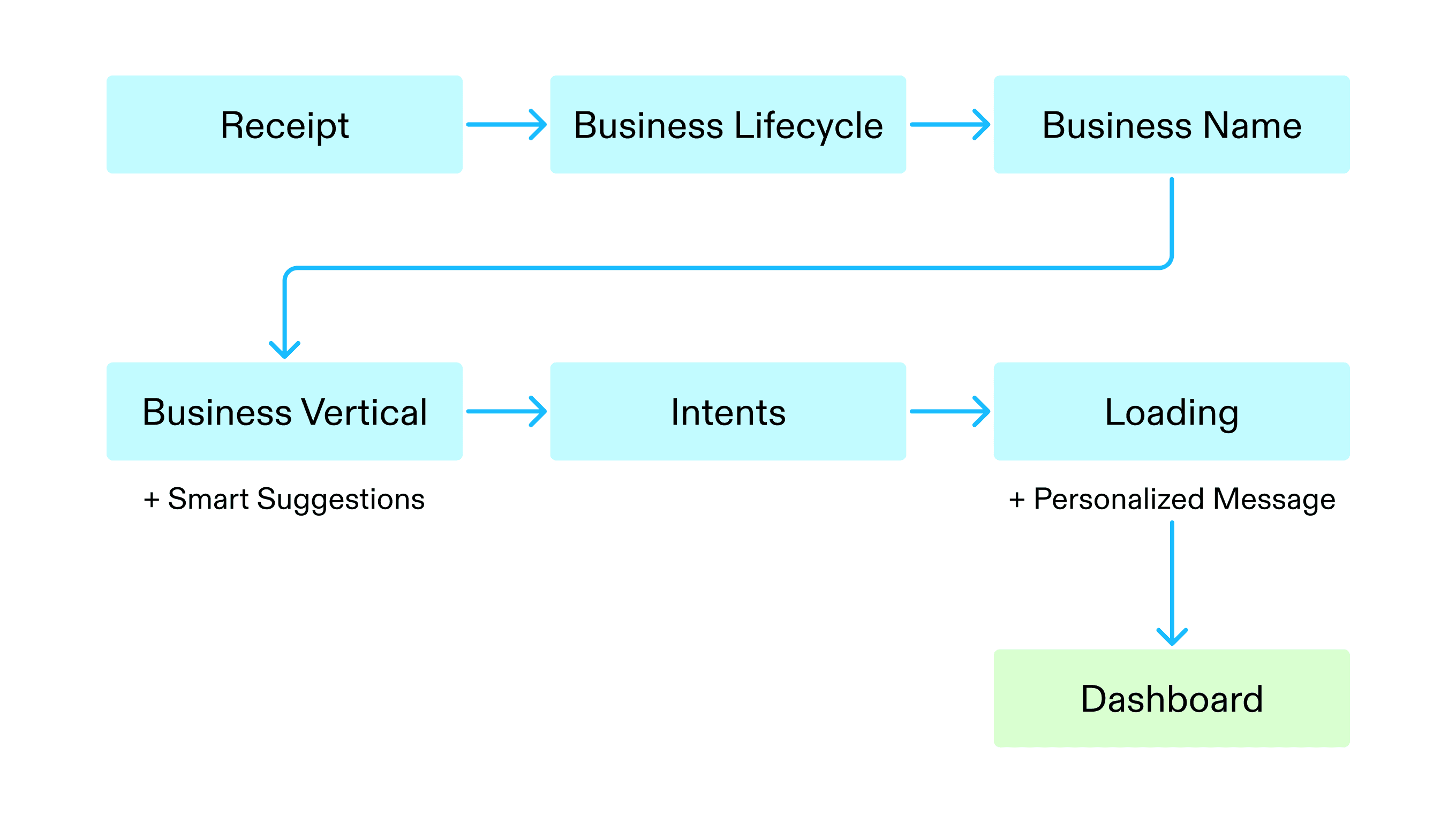
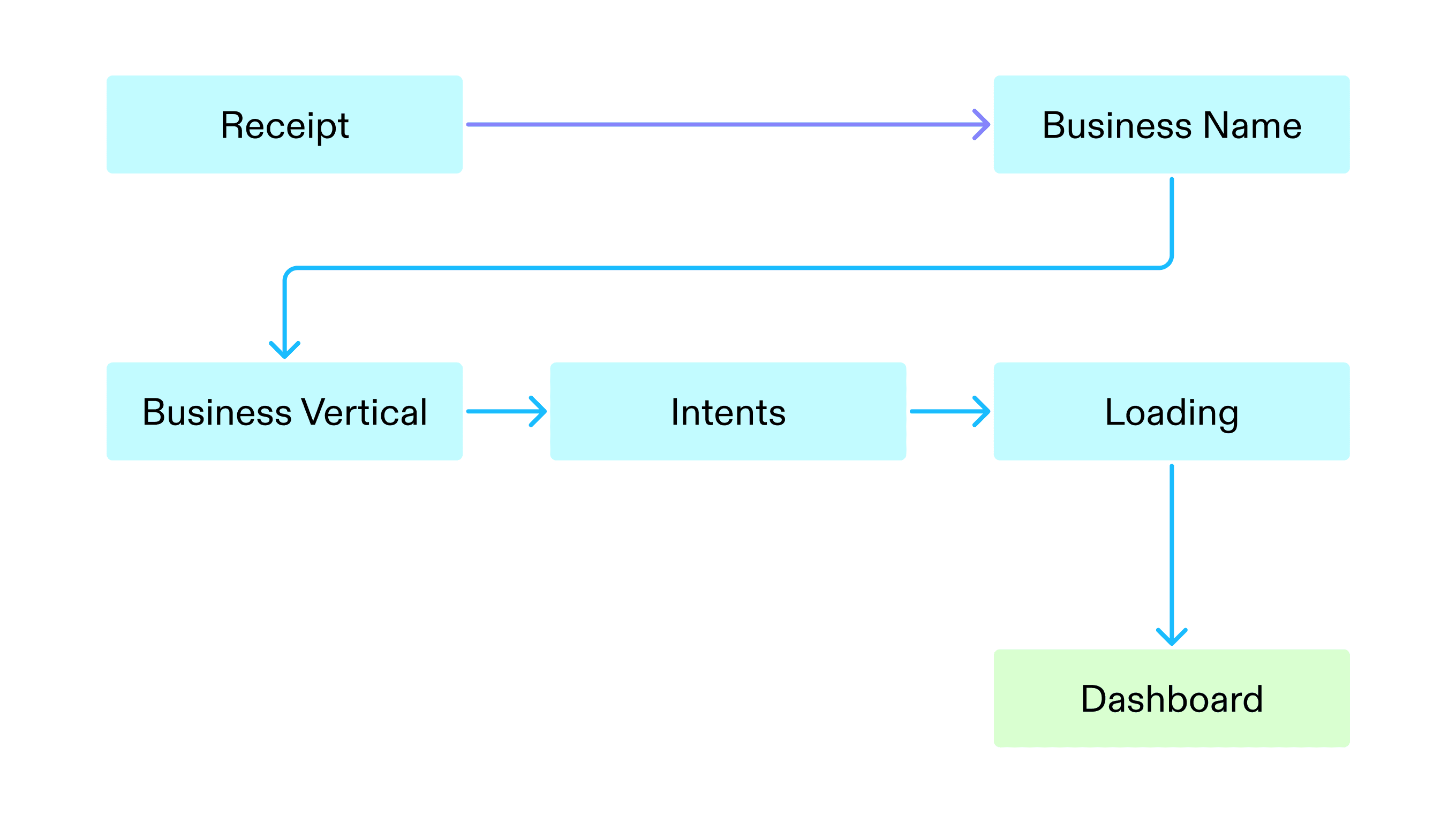
Polish through Prototyping
Because of the tight turn-around time, I collaborated closely with developers, designing at the same time as they were building so that we can be closely matched in our understanding of technical possibilities and UX recommendations. We went back and forth with prototyping, and I mocked up demos for chip selection animation, input field interactions, loading states, and animated backgrounds.
Chips Animation & Logic
One interaction piece I worked with developers on was updating our chip logic, states, and interactions, especially because we were using a custom component instead of our design system's defaults. This is a demo that I created for the engineering team's reference.
Loading State
Another interaction that I demo'd to engineers was our new loading state, which cycles through with what All Access customers could use within their trial. The goal of this loading state was two-fold: to raise customer awareness of product offerings and to accommodate for a long loading time with an active state.
Outcomes
The experiments our team launched within just a few weeks for this specific customer base was rich with learnings. We were able to prove many of our previous assumptions as incorrect, such as underestimating mobile-first flows, or assuming that customers will drop off if presented with too many steps. Our team continues to build on our learnings with the intelligent onboarding framework that we are developing, now accounting for more moments of personalization, conversational interfaces, and interactive elements.